Some Wagyu announces itself the moment it hits the pan. Yonezawa Gyu does something quieter. It arrives with more than 150 years of history behind it, and it is remembered less for richness than for how gracefully that richness disappears.
Produced only in the Okitama basin of Yamagata Prefecture in northern Japan, Yonezawa Gyu is one of the country’s oldest and most respected Wagyu names — frequently counted among Japan’s Three Great Wagyu alongside Kobe and Matsusaka.
A name older than most Wagyu brands
The story begins in the early Meiji era, when Charles Henry Dallas, an English teacher living in Yonezawa, carried beef from Yamagata back with him to Yokohama. The foreign residents there were struck by its quality, and word spread well beyond the mountains where it was raised.
In the century and a half since, the region has refined its breeding, feeding, grading and certification into one of Japan’s most disciplined beef traditions.
What earns the name
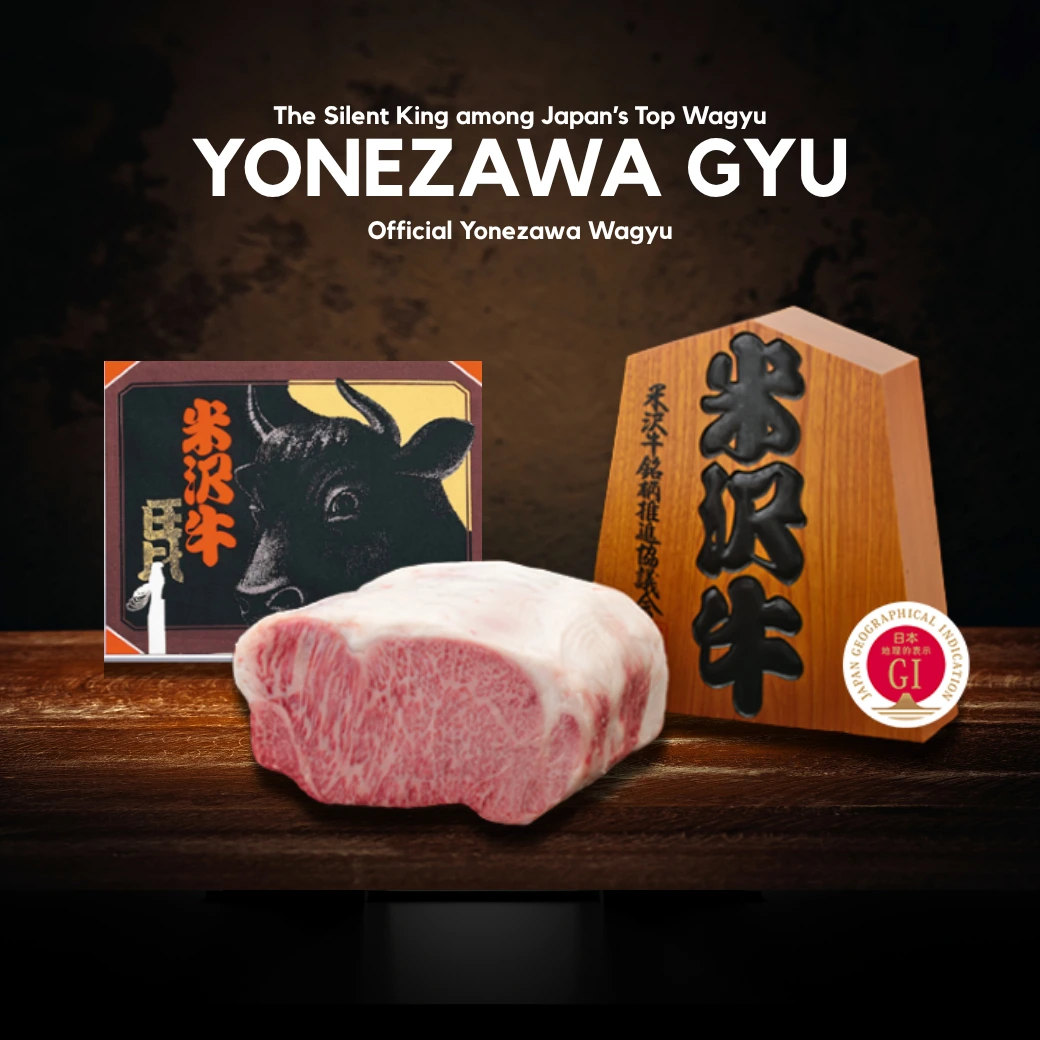
Yonezawa Gyu is protected under Japan’s Geographical Indication (GI) system. Only beef produced to the official specification, inside the designated area, may legally carry the name. A carcass qualifies only if it is:
- Japanese Black (Kuroge Washu)
- A heifer that has never calved
- Raised in the Okitama region of Yamagata
- Finished at 33 months or older
- Graded Meat Quality 3 or above
- Certified through the official Yonezawa brand system
The 33-month decision
That finishing age is the detail worth pausing on. Until 2023 the requirement was 32 months. The brand raised it to 33 — voluntarily.
An extra month sounds modest. In practice it means finer marbling, softer fat, more developed flavour and a silkier texture. It also means higher feed costs and more risk carried by the farmer for every animal. Choosing to keep cattle longer, when nothing forced the change, tells you what the region optimises for: quality rather than efficiency.
Snow, heat, and local rice straw
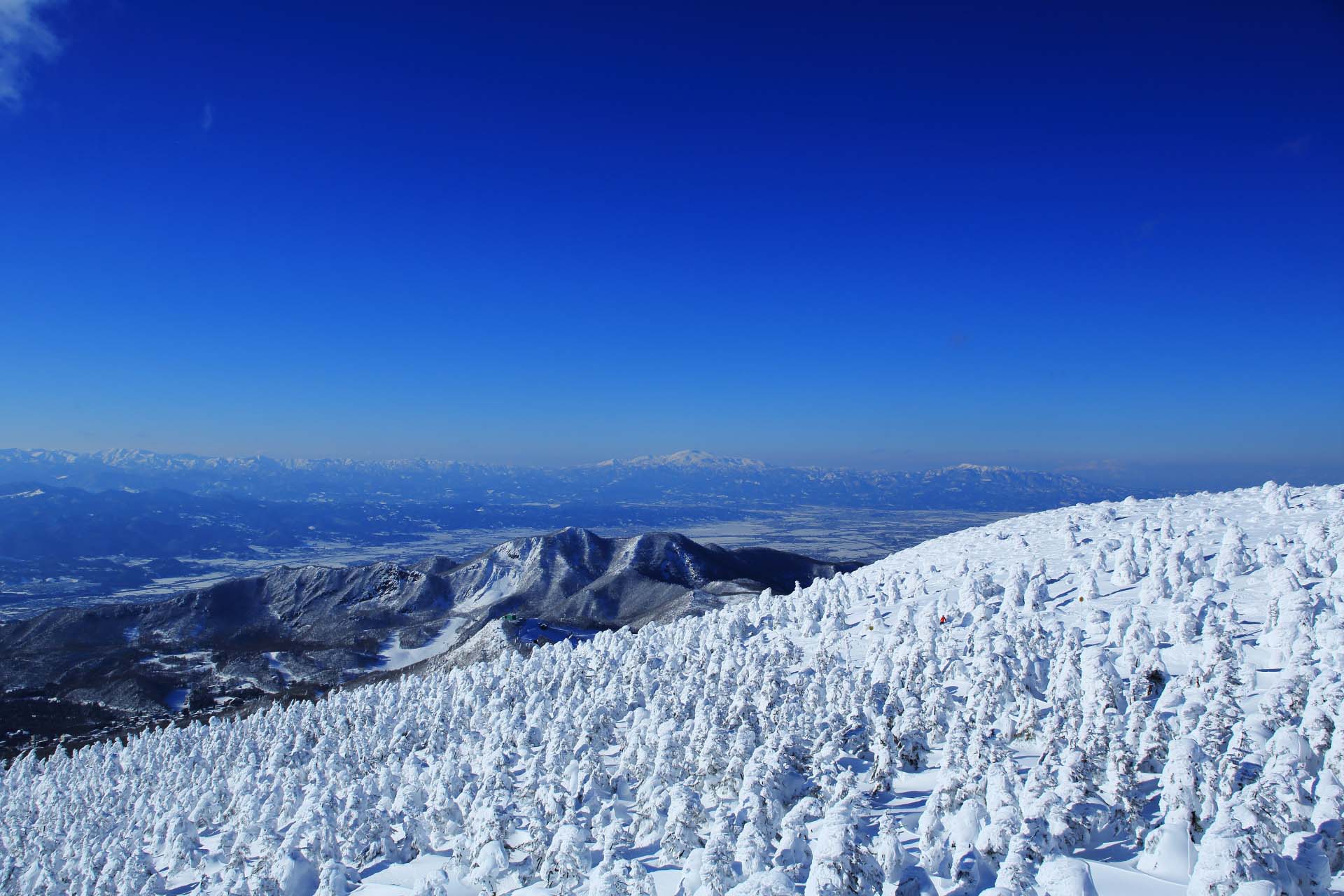
The Okitama basin swings hard between seasons — snowy winters dropping below −15°C, then hot, humid summers. That wide seasonal range is long credited with developing the marbling and depth of flavour the beef is known for.
Feed formulas vary from farm to farm, but the traditional backbone is consistent: locally grown rice straw, barley, soybean meal, wheat bran and carefully blended concentrates. The quality of the rice straw from surrounding rice farms has been a defining regional characteristic for generations.
How it eats
Chefs tend to reach for the same words: refined sweetness, delicate aroma, buttery texture, richness that never turns heavy.
| Marbling | ★★★★★ |
| Fat quality | Extremely fine |
| Sweetness | Very high |
| Beef flavour | Elegant rather than bold |
| Texture | Silky |
| Finish | Clean, melts quickly |
Cooking it at home
Yonezawa’s fat melts at a relatively low temperature, which changes how you should treat it. Gentle heat flatters it; aggressive charring works against everything that makes it worth buying.
It shines in sukiyaki, shabu-shabu, as a steak, over yakiniku, and as tataki with the appropriate cuts. Serve smaller portions than instinct suggests — this is beef that satisfies quickly.
Where it sits among our hero brands
| Brand | Character |
|---|---|
| Yonezawa Gyu | Elegant, refined, silky, historic |
| Marble King | Powerful Wagyu flavour, rich Australian Full Blood marbling |
| Omino Wagyu | Clean, balanced sweetness from Omi × Angus genetics |
| WAO Kumamoto | Rich flavour with volcanic terroir influence |
| Awa Kuroushi | Excellent value with balanced marbling from F1 breeding |
A few things worth knowing
- More than 150 years of history.
- Protected under Japan’s GI system.
- Minimum 33-month finishing period.
- Produced only in the Okitama region.
- A fixture of high-end Japanese dining for generations.
- Its Gyunikudomannaka beef bento has been a beloved railway ekiben for decades.
More than 150 years of craftsmanship have shaped one of Japan’s most revered Wagyu. Raised through the snowy winters of Yamagata and finished for at least 33 months, Yonezawa Gyu is celebrated not for richness alone, but for its remarkable elegance, silky texture and refined sweetness.
Taste it for yourself
We carry Yonezawa Gyu A5 in both steak cuts and full blocks:
- Yonezawa Gyu A5 Striploin Steak
- Yonezawa Gyu A5 Tenderloin Steak
- Yonezawa Gyu A5 Striploin Full Block
- Yonezawa Gyu A5 Tenderloin Full Block
- Yonezawa Gyu A5 Ribeye Full Block
- Yonezawa Gyu A5 Striploin End Cut Full Block
Tracking your way through Japan’s great Wagyu regions? Follow the trail in the Beef Explorer.